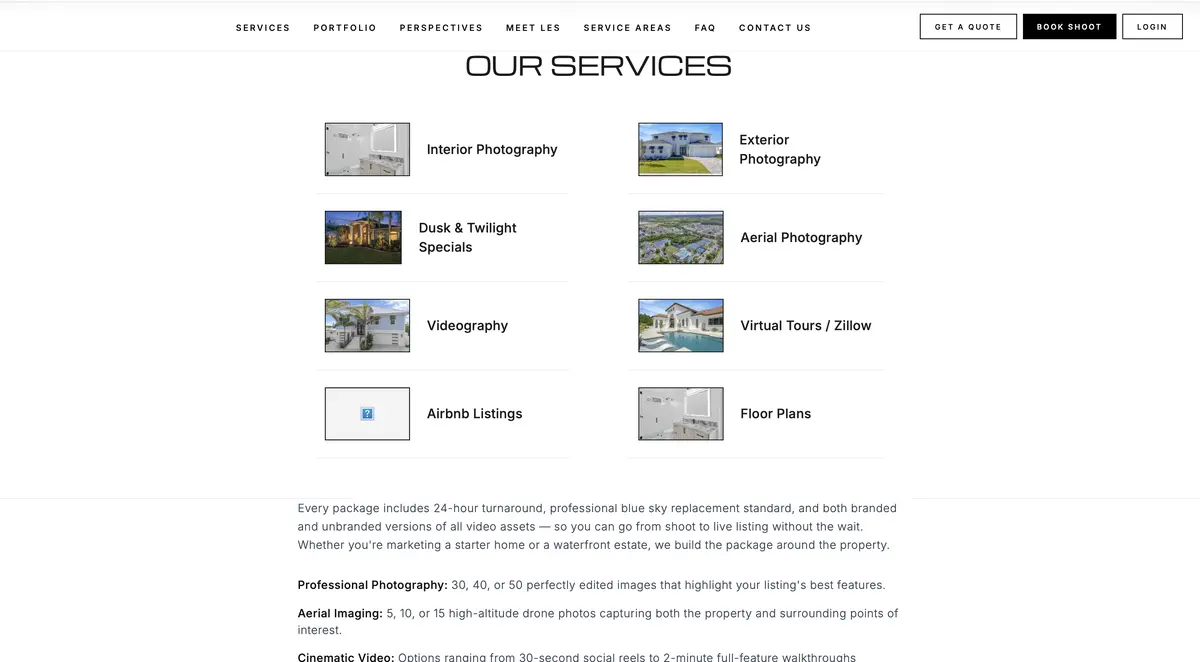
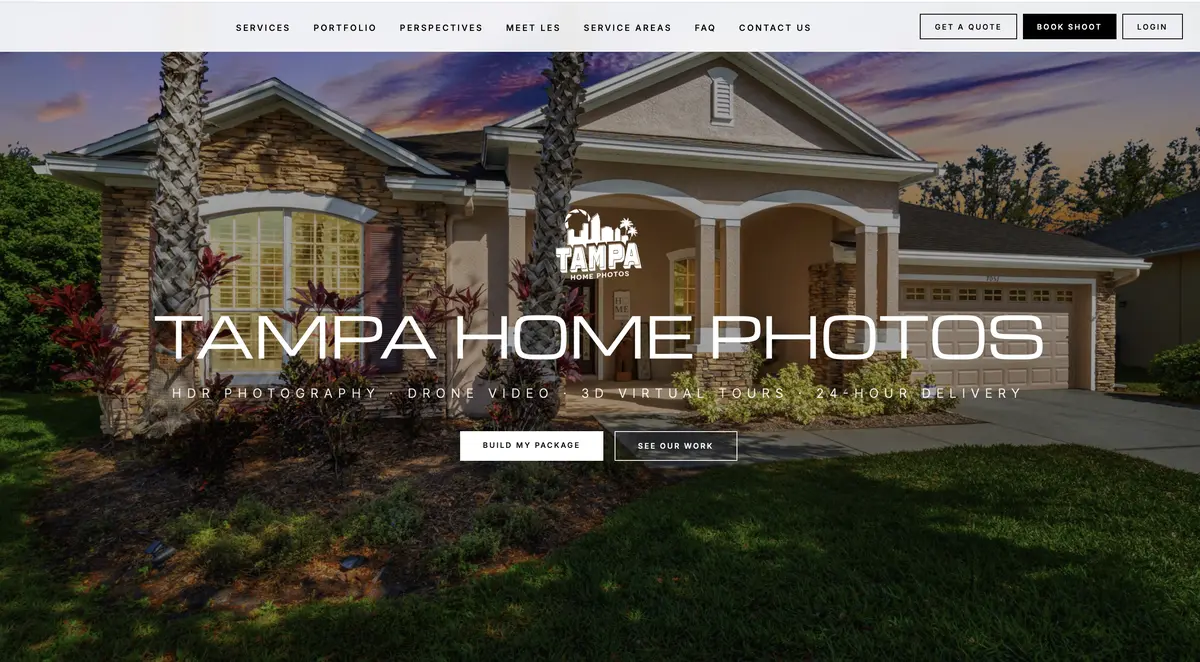
Case studies are easy to fake and hard to trust — most "before and after" stories in this industry are marketing copy dressed up as proof. This one isn't. It's the actual audit history of a real client's site: a Tampa Bay real estate photography business that came to us running on a template-based shared hosting platform, with none of the underlying technical foundation that actually drives visibility.
Here's exactly what changed, and why each piece mattered.
Where it started
The original site technically worked — it loaded, it had photos, it had a contact form. But underneath the surface, it was invisible to search engines in almost every way that matters:
- No structured schema or JSON-LD data — search engines had no machine-readable way to understand what the business actually was
- Fragmented canonical tags and mixed URLs, confusing which version of each page should actually rank
- No Open Graph or Twitter Card data — links shared on social media showed up blank or broken
- No dedicated county-level landing pages, despite serving multiple distinct service areas
- Unoptimized images — no WebP format, no alt text, slow to load
- Slow load times caused by unnecessary third-party scripts
- No sitemap.xml or robots.txt configuration guiding search engines through the site
None of this was visible to a customer just browsing the site. All of it was actively suppressing how often the business showed up in search — which is exactly why so many businesses don't realize this kind of problem exists until someone points it out.
What we rebuilt
Infrastructure
Moved off shared template hosting to a dedicated production environment, giving full control over performance, headers, and caching — none of which is possible on a locked-down shared platform.
Structured Data
Implemented full JSON-LD LocalBusiness schema across the site — giving Google an explicit, structured answer to "what is this business, where is it, and what does it do" instead of forcing it to guess from unstructured page text.
URL & Canonical Structure
Replaced the fragmented URL structure with universal, consistent canonical tags across every page — eliminating the duplicate-content confusion that was actively working against the site's rankings.
Social & Sharing
Added full Open Graph and Twitter Card integration, so every link shared to Facebook, Instagram, or X actually displays a proper preview image and description instead of a blank or broken card.
Local Coverage
Built six dedicated county landing pages, each with genuinely distinct, locally-relevant content — giving Google a specific, targeted page to match against searches in each service area, instead of one generic "we serve the whole region" page trying to rank everywhere at once.
Image Performance
Converted the entire image library to WebP with geo-targeted file naming, cutting load times dramatically while also giving search engines additional local-relevance signals through the filenames and alt text themselves.
Technical Foundation
Deployed a proper structured sitemap.xml and robots.txt, giving search engines a clear, complete map of every page that should be indexed — something the original site never had.
The result
The rebuilt site achieved a 39/39 perfect technical SEO audit score, sub-second load times on a pure vanilla stack with no bloated third-party scripts dragging it down, and full geographic coverage across every county the business actually serves.
| Before | After |
|---|---|
| Template-based shared hosting | Dedicated production server |
| No structured data | Full JSON-LD LocalBusiness schema |
| Fragmented canonical tags | Universal canonical structure |
| No social card data | Full Open Graph & Twitter Cards |
| No county-level pages | 6 dedicated county landing pages |
| Unoptimized images | Full WebP conversion, geo-targeted |
| No sitemap/robots.txt | Full technical SEO foundation |
Why this matters for any small business
Nothing about this transformation was about making the site "prettier." Every single change was structural — the kind of work that's invisible to a customer scrolling through, but decisive to whether that customer ever finds the site in the first place. This is the gap between a site that merely exists and one that's actually built to be found.
Wondering what's missing on your own site?
We'll run through exactly this kind of audit and tell you what's actually holding you back.
Get a Free Consultation